English
Shopify App, WordPress Plugin or Independent SaaS: Where to Start?

Contents
A platform supplies context: customers already operate a shop or website and seek extensions there. Independent SaaS offers more freedom but must build access to buyers. The choice needs a specific buyer and workflow.
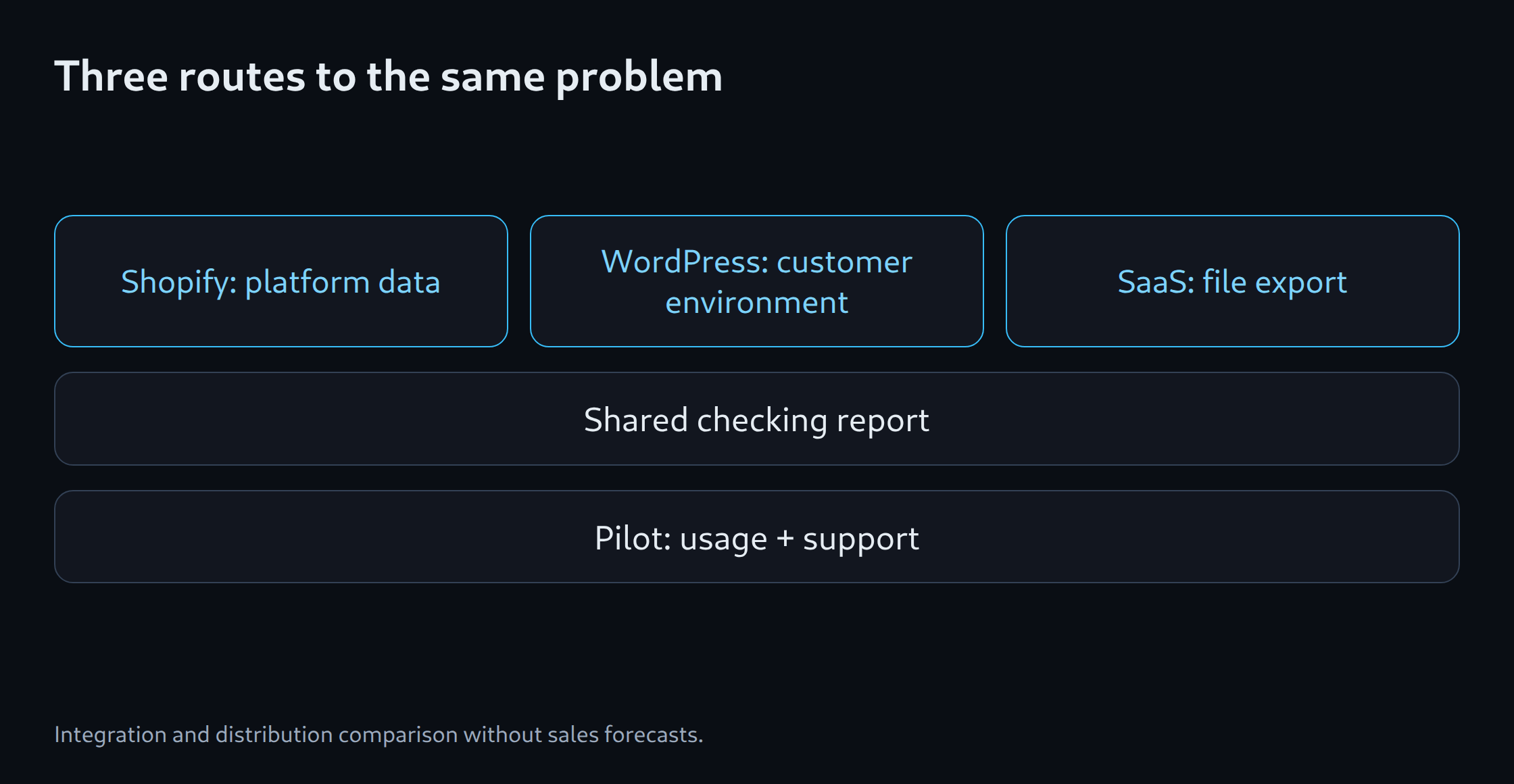
One product, three routes
The assumed product-data checker finds missing fields, conflicting variants and inconsistent prices. A Shopify app reads shop data through authorised interfaces. A WordPress plugin works within a compatible website data model. Independent SaaS initially accepts exports. These are different integrations, not automatically identical features.
| Route | Customer access | Main work |
|---|---|---|
| Shopify app | Merchants on one platform | Approval, API lifecycle, installation |
| WordPress plugin | Site owners and agencies | Environment diversity, updates, conflicts |
| Independent SaaS | Direct outreach and partnerships | Sales, onboarding, imports |
Shopify billing infrastructure
Shopify App Pricing supports recurring, usage and combined models, handling major parts of plan selection and billing. The app still needs correct access state and usage reporting where applicable. An app listing does not guarantee discovery or paying merchants. [1]
WordPress product form and rules
A WordPress.org listing follows its directory guidelines. Locked local functionality released through payment is not simply permitted trialware. Genuine external services and separately distributed premium products need separate consideration. A SaaS-connected plugin should describe real service rather than an artificial payment barrier. [2]
Technical costs include varied PHP versions, other plugins, hosting limits and updates. A failure affecting a single installation can require more support than a central service. Export-based products reduce initial integration but transfer work to customers.
A useful selection experiment
Interviews with one buyer group come first. A sample export and report establish relevance. A pilot then implements one integration route, recording installation effort, time to a useful result, questions and repeated use.
An exit needs exportable data and understandable project rules. Payments do not automatically migrate between platforms. Reviews, reach and approvals also remain tied to distribution channels.
The decision
A specific Shopify problem may justify platform integration. A WordPress plugin may fit agencies with an existing site portfolio. A cross-system problem may favour an independent import service. Launching all three routes at once increases work; a demonstrated core benefit is the better shared starting point.
Related tools
Questions and answers
Does an app directory automatically bring customers?
No. Listing creates a possible route, not proof of visibility, demand or sales.
Do plugins and SaaS have identical operations?
No. Plugins partly run in customer environments; SaaS needs its own central service.
Sources
Sources checked: 5 October 2026.
Related articles