English
Templates, Data Packs or Mini-Tools: Which Digital Product Can Sell Sustainably?

Contents
Digital products are cheap to copy. Value therefore usually comes from saved work, reliable selection or useful function rather than the file itself. Templates, data packs and mini-tools can address the same problem with different sales and maintenance obligations.
One audience
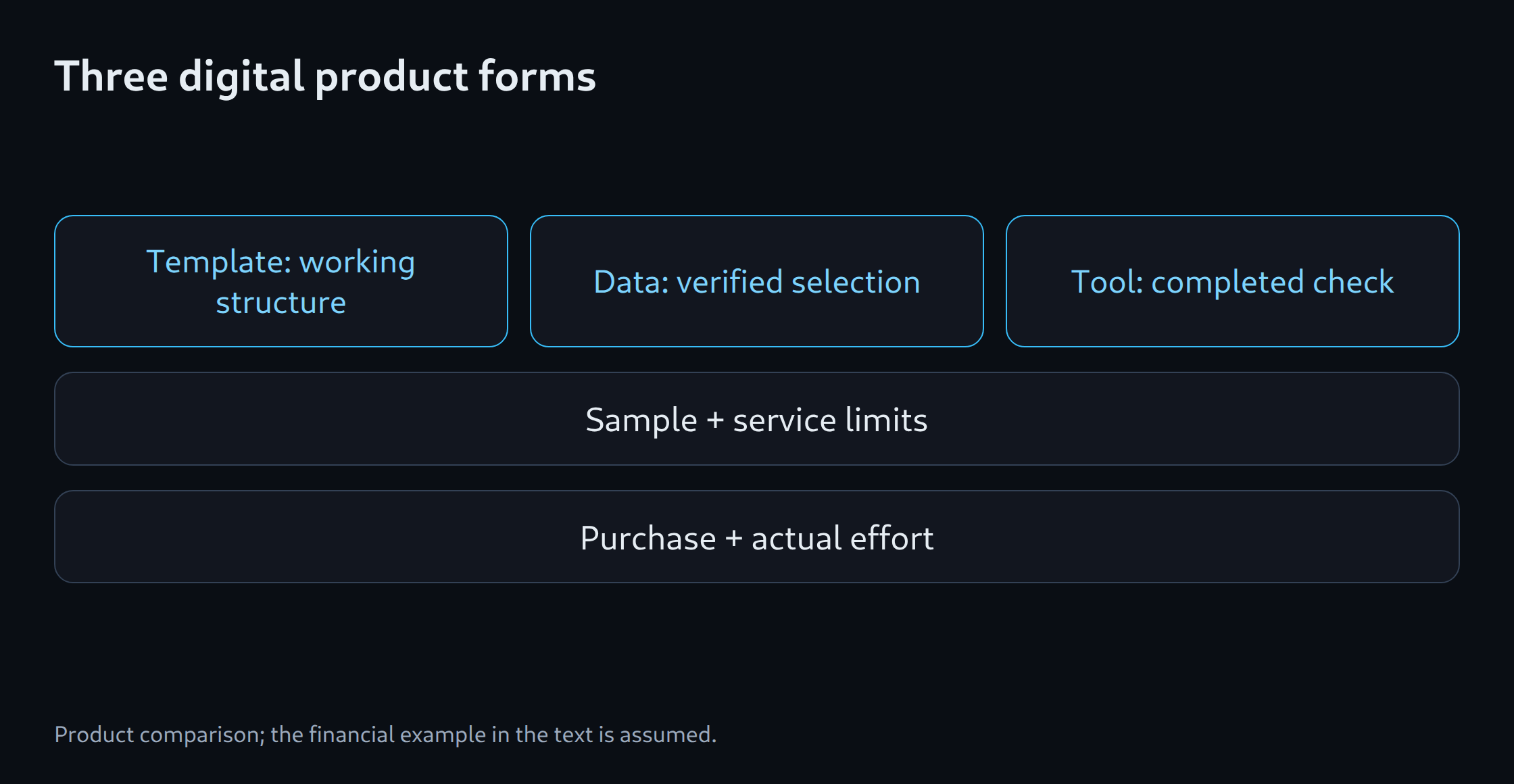
A small shop agency prepares product imports. A template supplies a structured working file. A data pack offers verified mappings for a named source. A mini-tool checks an input file. None is presented as an already tested sales product.
| Form | Strength | Work and risk |
|---|---|---|
| Template | Quick start in a familiar workflow | Compatibility, explanation, copying |
| Data pack | Verified selection saves research | Freshness, provenance, usage rights |
| Mini-tool | Performs the task | Fixes, platform changes, support |
A bounded product promise
For a template, state its format and the application it is designed for, and provide a completed example. For a data pack, explain when the data was collected, where it came from and how buyers may use it. A tool needs clear input limits and an explanation of what is excluded. Promising lifetime updates creates an indefinite obligation for a single payment.
Publicly accessible data is not automatically free to resell. A pilot can use original, expressly permitted or appropriately licensed data with recorded provenance. Rights need checking for the particular source.
Delivery does not establish demand
Shopify documents digital product delivery. Lemon Squeezy describes its Merchant-of-Record role. These can support transactions, not establish quality or a reason to buy. [1, 2]
An honest pre-sale
A sample and precise scope show quality and limits. A bounded pre-sale states delivery dates, supported formats and non-delivery handling. It must not pretend that unfinished work is complete. One product form is enough for the first experiment.
An assumed €39 price and twelve sales produce €468 before fees, refunds and taxes. With 18 hours of work, that equals €26 per hour before further costs. These are workload assumptions, not a sales forecast. Maintenance and support reduce the remainder.
Repeat purchases
New datasets, use cases or checking functions can justify another purchase. Cosmetic changes cannot establish durable value. Membership needs a recurring deliverable, such as verified quarterly data or compatibility corrections. A one-off purchase often describes an unchanged utility more clearly.
Related tools
Questions and answers
Is a data pack automatically passive income?
No. Freshness, provenance and customer questions can require ongoing work.
Does a pre-sale prove a sustainable business?
No. It tests purchase willingness for one offer. Repeat demand and support need separate evidence.
Sources
Sources checked: 5 October 2026.
Related articles