

TCF Explained: What It Is, Why It Matters and Which CMPs Are Certified

Contents
Whenever someone visits a website and clicks “Accept All” or “Reject All” on a cookie banner, a massive chain reaction happens behind the scenes. The website now knows the visitor’s choice, but how do the dozens of advertising networks and analytics tools (like Google, Facebook, or external ad servers) know what was decided? The answer is TCF.
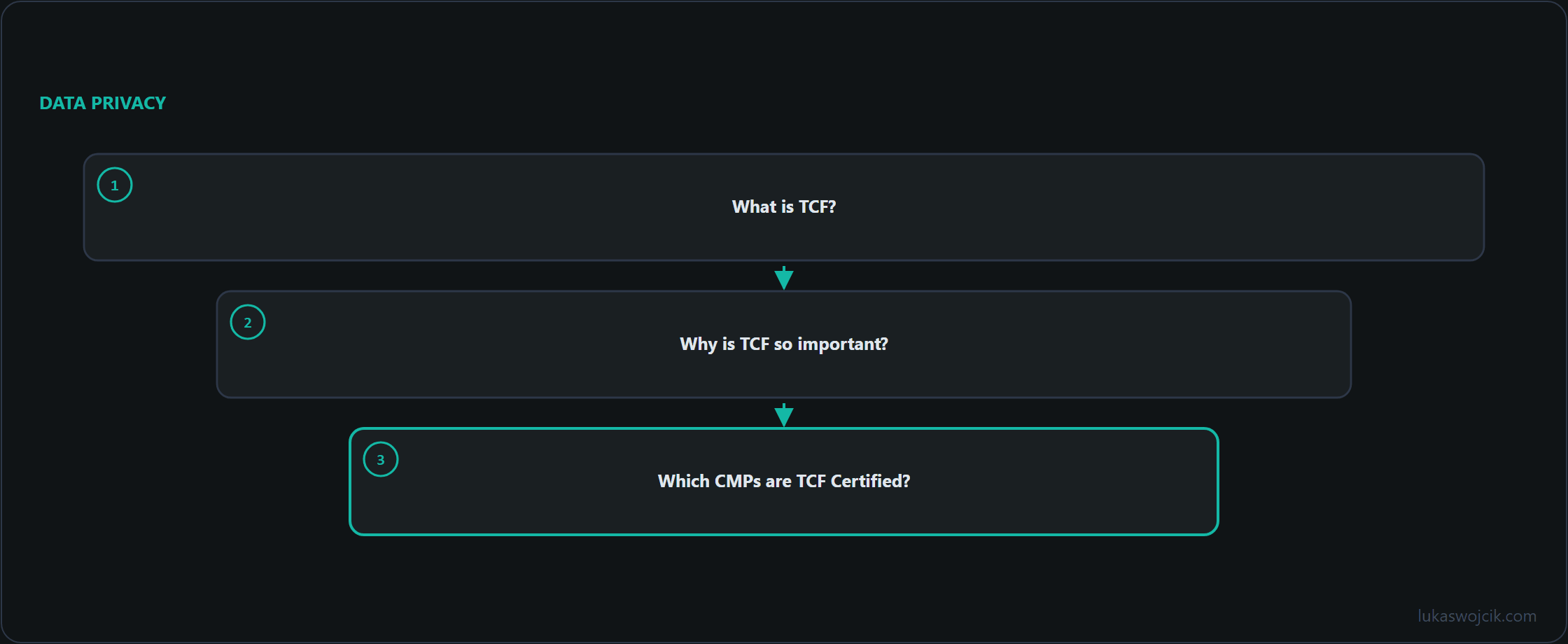
What is TCF?
TCF stands for Transparency and Consent Framework. It was created by the digital advertising industry (IAB Europe) to solve a huge communication problem.
To understand TCF without legal jargon, imagine a large restaurant. The waiter (the website’s cookie banner) takes a highly specific order from the guest: “A salad, but no tomatoes and no dressing.” However, there are 50 different chefs in the kitchen (the advertising partners), and they all speak different languages. If the waiter just yells into the kitchen, mistakes will happen.
TCF is like a universal ticketing system. The waiter punches the order into a machine, and it prints out a barcode. Every single chef in the kitchen has a scanner that reads this barcode perfectly. In the digital world, TCF takes the visitor’s choices on the cookie banner and packages them into a single, standardized digital code (called the “TC (Transparency and Consent) String”).
Why is TCF so important?
Without TCF, every advertising platform would have to build a custom connection with every single cookie banner to understand if they are allowed to track a user. This would be technical chaos.
Thanks to TCF:
- Users get clear, standardized information about who wants to process their data and for what exact purposes.
- Advertisers don’t have to guess. They read the TCF signal and instantly know: “I am not allowed to show personalized ads to this user.”
- Websites stay legally compliant because the framework strictly blocks unauthorized tags from firing.
Which CMPs are TCF Certified?
To generate this universal code, a website must use a Consent Management Platform (CMP)—the software that creates the actual cookie banner. Not every banner can speak the TCF language. To do so, the CMP must pass strict tests and be officially certified by IAB Europe.
Some of the most popular and reliable TCF-certified CMPs include:
- Usercentrics
- Cookiebot
- OneTrust
- Didomi
- InMobi CMP (formerly Quantcast Choice)
Using a certified CMP guarantees that the privacy choices made by the visitor are translated into the TCF standard perfectly and passed on to all marketing tools without errors.
Summary: How TCF Helps in Consent Management
In short, TCF acts as the ultimate digital translator. It helps manage consent by standardizing communication. Instead of manually configuring hundreds of marketing tags to behave properly when a user rejects cookies, TCF automates the process. It ensures that the user’s “Yes” or “No” is instantly broadcasted to the entire advertising ecosystem in a language every system understands, ensuring privacy choices are respected across the board.
Related articles




One comment
The restaurant analogy is the first explanation of a TC string I have been able to repeat in a meeting without drawing a diagram.
One thing worth adding for anyone picking a CMP from that list: certification says the banner produces a valid string, not that anything on the site reads it. Those are separate questions, and the second one is answered tag by tag. The other half people underestimate is the vendor list itself — a default configuration can present several hundred partners, and the length of that list is a decision the site makes, not something the framework imposes. Trimming it to the vendors actually in use makes the banner shorter, the string smaller, and the whole thing easier to defend.