English
 Deutsch
 Polski
Current AI Models Compared: GPT, Claude and Gemini versus DeepSeek and Qwen

Contents
A comparison of current AI models needs more than a leaderboard. A chat product, a model API and downloadable weights offer different forms of access. This overview is dated 6 October 2026 and uses official documentation. No original performance measurements underpin the assessment.
The concrete comparison set
OpenAI lists GPT-6 Astra, GPT-6.1 Sol and GPT-6 Luna. Anthropic lists Claude Fable 5.1, Opus 5.5 and Sonnet 5.5. Google documents Gemini 3.8 Flash as stable. DeepSeek V4.1 Flash and Qwen3.8-27B provide concrete references on the open-weight side. A documented API does not establish access to every model in every consumer subscription. [1, 3, 6, 7, 8]
Access and operational control
| Family | Concrete candidates | Deployment | Key check |
|---|---|---|---|
| GPT | Astra / 6.1 Sol / Luna | Hosted API | Quality target and effort |
| Claude | Fable 5.1 / Opus 5.5 / Sonnet 5.5 | Hosted API | Agent workflow and tools |
| Gemini | 3.8 Flash | Hosted API | Documents and input modalities |
| DeepSeek | V4.1 Flash | API or published weights | Full model and memory |
| Qwen | 3.8-27B | Weights / suitable serving service | Artifact, runtime and quantization |
DeepSeek V4.1 Flash weights use the MIT licence; Qwen3.8-27B uses Apache 2.0. These specific licence statements do not establish the terms of other variants. Open-weight access does not mean that all training data is public or that operation is free. [7, 8]
Ollama is the execution layer
Ollama is not another foundation model. It manages and runs models and exposes an API. A meaningful comparison therefore pairs GPT-6.1 Sol with an exact Qwen or DeepSeek checkpoint running under a recorded Ollama version. The model tag, quantization and context belong in the test log. Ollama also supports cloud features, so its name alone does not establish a local data path. [9]
A useful shortlist
Astra and Opus are reasonable candidates for demanding cloud tasks; Sol and Sonnet extend the comparison when budgets are tighter. Gemini warrants evaluation for mixed inputs. This is an editorial shortlist based on documented capabilities, rather than measured superiority. For local deployment, a smaller Qwen checkpoint is generally a more practical starting point than a complete large DeepSeek model.
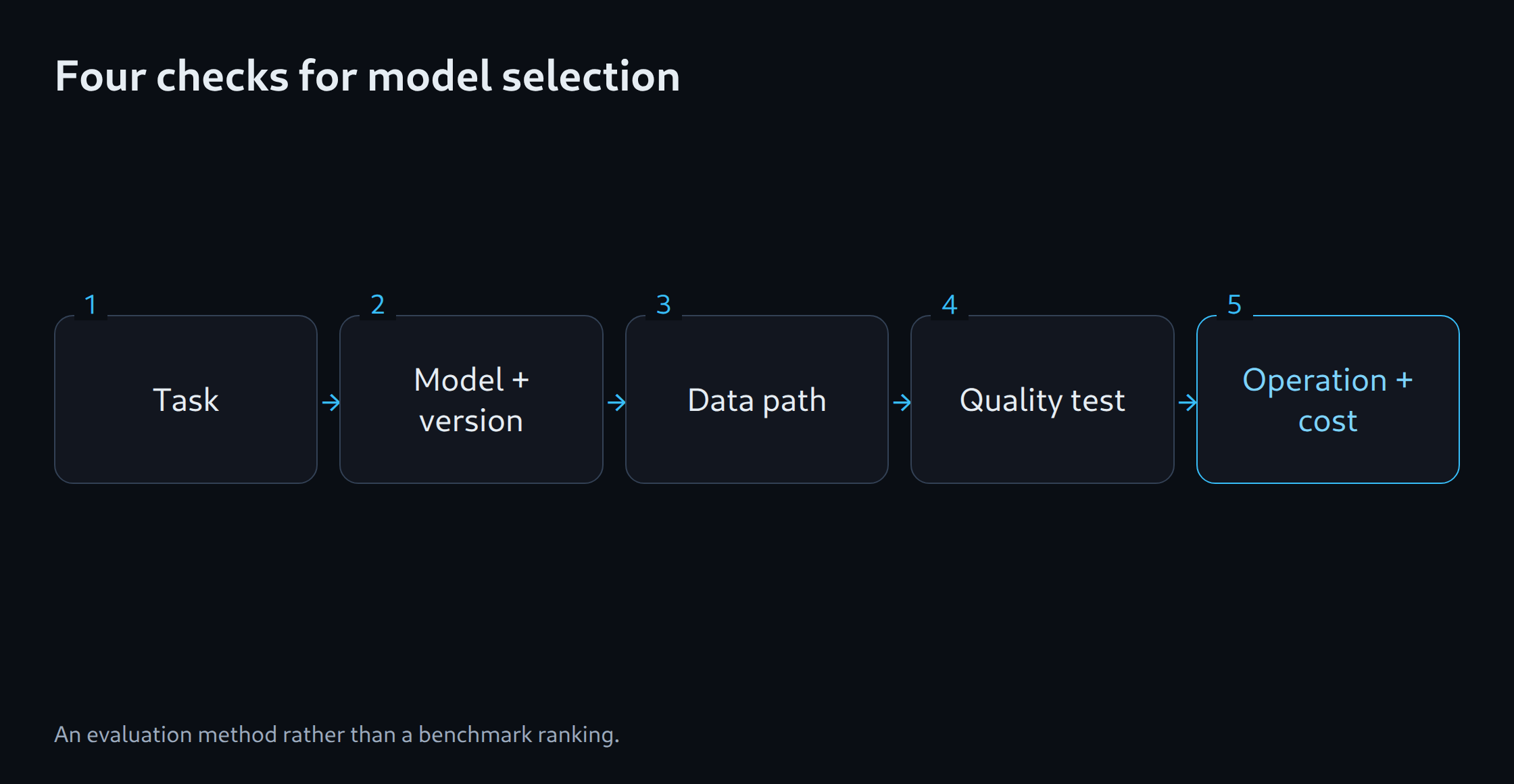
A pilot uses the same tasks, explicit acceptance criteria and repeated runs. Errors, editing effort, elapsed time and cost are recorded separately. The result is a suitable combination of quality, data path and operating effort rather than a supposedly universal winning brand.
Related tools
Questions and answers
Is Ollama a competitor to GPT or Claude?
Ollama is a runtime and model manager. Concrete models and deployment conditions are comparable; the software alone has no independent model quality.
Are open-weight models automatically suitable for local use?
Downloadable weights provide one prerequisite. Architecture support, memory, quantization and licensing still require separate checks.
Sources
- OpenAI: model catalogue
- OpenAI: GPT-6.1 Sol
- Anthropic: Claude model overview
- Anthropic: Claude Opus 5.5
- Anthropic: Claude Sonnet 5.5
- Google: Gemini 3.8 Flash
- DeepSeek: V4.1 Flash model card
- Qwen: Qwen3.8-27B model card
- Ollama: FAQ and local/cloud operation
- OpenAI: API pricing
- DeepSeek: models and pricing
- Google: document understanding
Sources checked: 6 October 2026.
Related articles